
First Sentences
264 Words
Mongolia is a country.
Mongolia is in Asia.
It is very big.
Not many people live there.
Russia is near Mongolia.
China is near Mongolia.
The capital city is Ulaanbaatar.
Many people live there.
It is very cold in winter.
It is warm in summer.
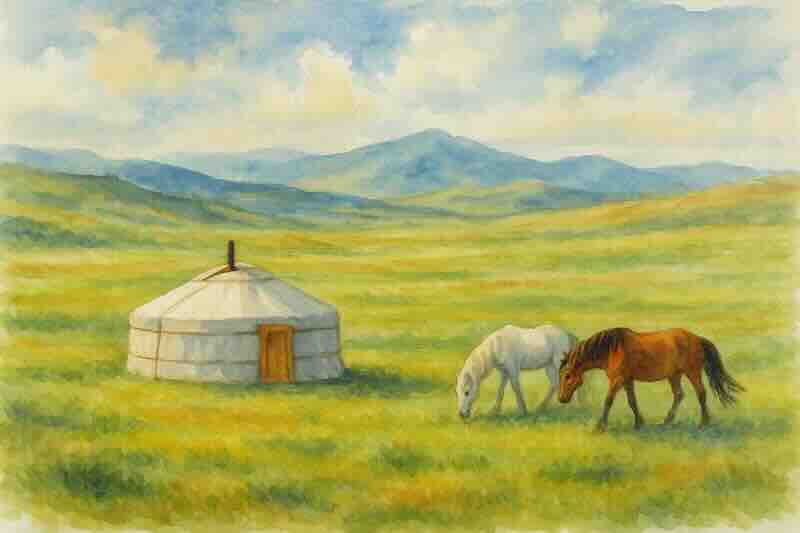
Mongolia has mountains.
Mongolia has big open land.
There is grass on the land.
There is a desert.
The Gobi Desert is very big.
There are not many trees.
There are many animals.
People have horses.
People have sheep and goats.
People have camels.
Many people live in cities.
Some people live in the country.
Some people move from place to place.
These people are nomads.
Nomads live in round tents.
The tent is called a ger.
A ger is warm in winter.
A ger is cool in summer.
People ride horses.
Children ride horses, too.
Mongolian food is simple.
People eat meat.
People eat bread.
People drink milk tea.
People eat dumplings.
Dumplings have meat inside.
Mongolia has holidays.
Naadam is a big holiday.
It is in summer.
People race horses.
People wrestle.
People shoot arrows.
Tsagaan Sar is the New Year.
It is in winter.
Families visit each other.
A man named Genghis Khan lived in Mongolia.
He was a great leader.
Animals are very important.
Horses help people.
Camels help people.
Today, some people live in cities.
Some people live in gers.
Children go to school.
They learn to read and write.
Mongolia is a beautiful place.
The sky is very blue.
There are wild horses.
You can visit Mongolia.
You can see animals and nature.
Level 1 Reader
730 Words
Mongolia
Mongolia is a country. It is in Asia. It is between Russia and China. Mongolia is very big. But not many people live there. It is one of the least crowded countries in the world.
The capital city is Ulaanbaatar. Many people live there. It is cold in winter. It snows a lot. In summer, it is warm. Ulaanbaatar is the center of the country. People go there to work, shop, and study.
The Land
Mongolia has many mountains. It also has many flat places called steppes. A steppe is a big, open space with grass. It is good for animals. There are also deserts. The Gobi Desert is very big. It is hot in summer and very cold in winter.
There are not many trees in Mongolia. But there are many animals. Horses, camels, sheep, goats, and cows live there. Many people have animals. They take care of them every day.
The People
The people of Mongolia are called Mongolians. Many Mongolians live in the city. But some Mongolians live in the country. They move from place to place. These people are called nomads. Nomads live in round tents called gers.
A ger is made of wood and fabric. It is warm in winter and cool in summer. A family can build a ger in one day. They can take it down and move it easily.
Nomads ride horses. They take animals to new places for food and water. Children help with the work. They ride horses, too. They learn from their parents.
Food
Mongolian food is simple. People eat meat, milk, and bread. Meat is very important. People eat beef, mutton (sheep), and goat. In winter, they eat a lot of meat to stay warm.
People drink milk tea. They also drink a special milk drink called airag. It is made from horse milk. People drink it in summer. Many visitors try it.
Bread is also popular. People eat it with butter or cheese. Some people make big dumplings called buuz. They are filled with meat. People eat them at home or on holidays.
Holidays and Festivals
Mongolia has many holidays. The biggest one is Naadam. It is in July. It is a summer festival. People wear special clothes. They sing and dance. They eat special food.
Naadam has three big sports: horse racing, wrestling, and archery. Boys and girls ride horses. Strong men wrestle. People shoot arrows at targets. These sports are very old. They are part of Mongolian culture.
Another big holiday is Tsagaan Sar. It is the Mongolian New Year. It is in winter. People wear new clothes. They visit family. They eat many dumplings. They say good words to each other.
History
Mongolia has a long history. A long time ago, a man named Genghis Khan lived in Mongolia. He made a big army. He made one of the biggest empires in the world. He was a great leader. Many people in Mongolia still talk about him today.
You can see a big statue of Genghis Khan near Ulaanbaatar. It is made of metal. It shows him on a horse. Tourists go there to take pictures.
Animals
Animals are very important in Mongolia. People ride horses. They use camels in the desert. Sheep and goats give milk and wool. Dogs help take care of the animals. Eagles are also important. Some people hunt with eagles in the mountains.
In the west of Mongolia, there are eagle hunters. They train big birds to catch animals. It is a special tradition. It is not easy. It takes many years to learn.
Life Today
Today, Mongolia is a mix of old and new. Some people live in big cities. They use the internet and mobile phones. They drive cars and take buses. Other people still live in gers and ride horses.
School is important in Mongolia. Children go to school from Monday to Friday. They learn to read and write. Some children study in the city. Others study in the country.
Mongolia is changing, but people still love their land, animals, and old ways.
Do You Want to Visit Mongolia?
Mongolia is a beautiful place. You can see big mountains, blue sky, and wild horses. You can sleep in a ger and eat buuz. You can watch horse races and learn about eagles.
If you like nature, animals, and adventure, Mongolia is a great place to visit!
Level 2 Reader
616 Words
Mongolia is a large country in Asia. It is between Russia and China. Many people think Mongolia is part of China, but that is not true. Mongolia is its own country. It has a long history, beautiful nature, and strong traditions.
The Land
Mongolia is a land of wide open spaces. There are few cities and many mountains, deserts, and grasslands. The weather is very cold in winter and hot in summer. People call Mongolia the “Land of the Eternal Blue Sky” because it has more than 250 sunny days every year.
One of the most famous places in Mongolia is the Gobi Desert. It is very large and dry. There are sand dunes, rocks, and even some snow in winter. Some animals, like camels and wild donkeys, live in the Gobi.
The People
About 3.4 million people live in Mongolia. Most people live in the capital city, Ulaanbaatar. The rest live in small towns or in the countryside.
Many people in the countryside are nomads. Nomads move from place to place with their animals. They live in round tents called gers (also called yurts). A ger is easy to take down and move. It is warm in winter and cool in summer.
Nomadic families take care of animals like sheep, goats, horses, cows, and camels. These animals give them milk, meat, wool, and leather. The families use almost every part of the animal.
History and Genghis Khan
Mongolia is famous for a great leader named Genghis Khan. He was born in 1162. He united many tribes and made a strong army. His army became one of the biggest empires in history — the Mongol Empire. It was larger than the Roman Empire. It covered parts of Europe, the Middle East, and all of Asia.
Genghis Khan was a very clever leader. He believed in hard work and loyalty. Even today, Mongolian people respect him a lot. There is a big statue of him near Ulaanbaatar. It is 40 meters tall, and you can even go inside it.
Culture and Traditions
Mongolian culture is rich and old. Music is very important. One special kind of singing is called throat singing. In this style, one person can sing two sounds at the same time! It sounds very different from pop music.
Another traditional part of Mongolian life is horse riding. Children learn to ride horses at a young age. Horses are very important to nomadic families. In fact, there are more horses than people in Mongolia!
Every summer, people celebrate a festival called Naadam. It has three traditional sports: horse racing, wrestling, and archery. Boys and girls can take part in the horse races. The wrestling is usually only for men. The winners become famous in their towns.
Food
Mongolian food is simple and heavy. It helps people stay warm in cold weather. A popular dish is buuz, which are meat dumplings. People also eat khuushuur, fried meat pies, and drink salty milk tea called suutei tsai.
Milk is used to make yogurt, cheese, and even a drink called airag, which is made from fermented horse milk. Some visitors think the taste is strange, but many Mongolians love it.
Today
Mongolia is changing. Young people move to the city for school and jobs. Still, many people want to keep old traditions alive. Tourists from around the world come to learn about Mongolian life and enjoy the beautiful nature.
Mongolia is a country with a strong spirit. The land is wild, the sky is big, and the people are proud of their past. If you visit, you will see horses running free, feel the cold wind on your face, and maybe even sleep in a ger under the stars.
Level 3 Reader
726 Words
Mongolia is a vast, landlocked country in Central Asia, famous for its wide-open spaces, strong traditions, and deep connection to nature. It shares borders with Russia to the north and China to the south. Despite its large size, Mongolia has one of the lowest population densities in the world, with many people still living in a traditional, nomadic way.
A Land of Harsh Beauty
The Mongolian landscape is dramatic and often extreme. From the endless steppe—flat grasslands stretching as far as the eye can see—to the harsh deserts of the south and snow-covered mountains in the west, Mongolia’s nature is both breathtaking and unforgiving. Winters are long and brutally cold, with temperatures often dropping below –30°C, while summers are short and hot.
One of the most famous parts of the country is the Gobi Desert, which is not just sand dunes, but also rocky hills and dry plains. Surprisingly, it is home to many animals such as wild camels, snow leopards, and gazelles.
Nomadic Life
For centuries, Mongolians have followed a nomadic lifestyle, moving with the seasons in search of fresh grass for their animals. Even today, many families live in gers (also known as yurts), which are round tents made of felt and wood. These homes are portable and can be packed and moved in just a few hours.
Herding animals is a central part of life. People raise sheep, goats, yaks, horses, and camels for milk, meat, and wool. Life as a nomad requires resilience, hard work, and a strong bond with nature.
History and Genghis Khan
Mongolia has a proud and powerful history. The most famous Mongolian in history is Genghis Khan, who united the Mongol tribes in the 13th century and created the largest land empire the world has ever seen. His armies conquered large parts of Asia and Europe, establishing trade and communication across the continent.
Today, Genghis Khan is still a national hero, and you can find his name and image everywhere—from vodka bottles to the capital’s airport. His legacy continues to shape Mongolian identity and pride.
Ulaanbaatar – The Capital City
Ulaanbaatar is Mongolia’s capital and largest city. It sits in a valley surrounded by mountains and has a population of over 1.5 million, which is nearly half the country’s total population. The city is a mix of old and new: Buddhist temples stand next to Soviet-era buildings and modern skyscrapers.
Pollution and traffic are serious issues in Ulaanbaatar, especially in winter, when coal is burned for heat. Still, the city is a cultural hub, full of museums, theaters, and music festivals that showcase Mongolia’s rich traditions.
Naadam Festival
Each July, Mongolians celebrate Naadam, a national festival that features the “three manly sports”: wrestling, horse racing, and archery. It is a time for families to come together, dress in traditional clothes, and enjoy food and fun.
During the horse races, children as young as five ride small but strong Mongolian horses across long distances. In wrestling, athletes wear special costumes and follow ancient rituals before each match. Archery is also taken seriously, with both men and women competing.
Naadam is not only a sporting event—it is a celebration of national pride and history.
Religion and Culture
The main religion in Mongolia is Tibetan Buddhism, although Shamanism—an ancient belief in spirits and nature—still survives, especially in rural areas. Many Mongolians visit monasteries for blessings or guidance.
Music and art are also important. One unique form of music is throat singing, in which singers produce more than one pitch at the same time. Traditional instruments like the morin khuur, or horsehead fiddle, produce deep, emotional sounds that reflect the spirit of the land.
A Changing Nation
Since the fall of Communism in 1990, Mongolia has become a democracy and opened its economy. Mining, especially for gold, copper, and coal, has become an important industry. However, this growth has brought challenges, such as environmental damage and social change.
Young people today face a choice: follow their ancestors’ nomadic way of life or move to the city in search of education and modern jobs.
Conclusion
Mongolia is a land of contrasts—ancient and modern, harsh and beautiful, traditional and rapidly changing. Whether you are riding across the steppe, exploring Ulaanbaatar, or listening to the sound of a morin khuur, Mongolia leaves a deep impression on all who visit.
Extensive Listening
First Sentences
Level 1 Audio
Level 2 Audio
Level 3 Audio
Natural Overview 1
Natural Overview 2
Natural Discussion
Audio is AI-generated using
AWS Polly or Google NotebookLM
Check Your Understanding
Comprehension Activity
A) In the article or B) Not in the article.