

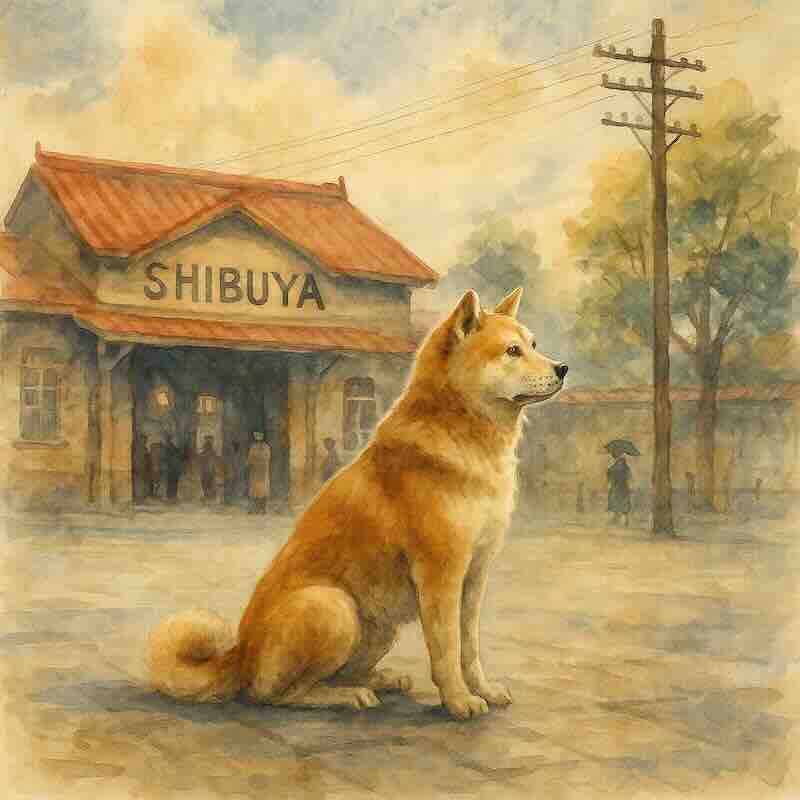
First Sentences
224 Words
Hachiko is a dog.
He is from Japan.
He is an Akita dog.
He is a medium dog.
Hachiko is born in Japan.
He is born in a small town.
He is a cute puppy.
He is quiet.
He is gentle.
Hachiko lives in Tokyo.
He lives with a man.
The man is Professor Ueno.
The professor loves Hachiko.
Every morning they walk together.
They walk to the station.
The station is Shibuya.
The professor takes the train.
The professor says goodbye.
Hachiko waits.
He waits at the station.
He waits for his owner.
In the evening the professor comes back.
They walk home together.
They are happy.
One day the professor does not come back.
The professor dies.
Hachiko does not know.
Hachiko waits again.
He waits every day.
The professor never comes back.
Hachiko lives with another family.
He has food and water.
But he goes to the station.
People see Hachiko.
Hachiko waits quietly.
People give him food.
People like him.
Hachiko waits many years.
He waits in rain.
He waits in snow.
He waits in the sun.
Hachiko dies.
People are sad.
There is a statue of Hachiko.
It is at Shibuya Station.
The statue shows a waiting dog.
People visit the statue.
People remember Hachiko.
Hachiko is a loyal dog.
Hachiko loves his owner.
The story is famous.
Level 1 Reader
688 Words
Hachiko – The Loyal Dog
Hachiko was a dog. He was not a big dog. He was not a small dog. He was a medium dog. Hachiko was an Akita dog. Akita dogs are from Japan. They have soft fur. They have a big tail. Their tails curl over their backs.
Hachiko was born in Japan in 1923. He was born in a small town. When he was a baby, he was very cute. He had light brown fur. He had round, dark eyes. He was quiet. He was gentle.
When Hachiko was still a puppy, he went to live in Tokyo. His new owner was a man. The man’s name was Professor Ueno. Professor Ueno worked at the University of Tokyo. He loved dogs. He loved Hachiko.
Every morning, Professor Ueno walked to Shibuya Station. He took the train to work. Hachiko walked with him. They walked slowly. They walked side by side. At Shibuya Station, the professor said goodbye. “Stay here, Hachiko. I will come back,” he said. Then he went into the station. He got on the train.
Hachiko waited. He waited outside the station.
He looked at the people. He listened to the trains. He waited for his owner. In the evening, the professor came back. Hachiko’s tail wagged. He barked softly. They walked home together.
Every day was the same.
Every morning, they walked to the station. Every evening, they walked home.
Hachiko loved the professor. The professor loved Hachiko.
They were happy.
One day in May 1925, something happened. That morning was like every other morning. They walked to the station. The professor said goodbye. He went to work. But in the afternoon, he did not come back. He had a sudden illness at work. He died at the university. He never returned to Shibuya Station.
But Hachiko did not know this. He waited. He waited all night. The next day, he waited again. The professor never came back. Still, Hachiko waited.
Hachiko went to live with another family. They gave him food. They gave him water. But every day, Hachiko went to Shibuya Station. He went in the morning. He went in the evening. He looked for the professor.
The people at the station saw him. At first, some people were not kind. They told him to go away. But Hachiko did not go. He sat quietly.
He waited.
Soon, people began to like Hachiko. They gave him food. They gave him water. They petted his head. They said, “Good dog.” They knew he was waiting for someone. They saw his loyalty.
A newspaper wrote about Hachiko. People in Japan read the story. They were touched. They loved Hachiko’s loyalty. They came to Shibuya to see him. They took pictures. They gave him treats. Hachiko became famous.
Year after year, Hachiko waited. He waited in the rain. He waited in the snow. He waited in the hot summer sun. He waited for almost ten years.
In March 1935, Hachiko died. He was twelve years old. People were very sad. They remembered his love. They remembered his loyalty.
The people of Shibuya made a statue of Hachiko. It is in front of Shibuya Station. The statue shows Hachiko sitting and waiting. It is made of bronze. It is big and strong. The statue is a symbol of loyalty and love.
Today, many people go to see the statue. They take pictures with it. They touch it for good luck. They remember the story of Hachiko.
Hachiko’s story is famous in Japan. It is also famous in other countries. There are books about him. There are movies about him. People all over the world know about the loyal dog of Shibuya Station.
Hachiko teaches us something important. He teaches us about love. He teaches us about waiting. He teaches us about loyalty. Even when the professor was gone, Hachiko still waited. He never forgot his friend.
When you go to Shibuya, you can see the place where Hachiko waited. You can see his statue. You can remember the dog who waited every day. You can remember the dog who loved his owner forever.
Level 2 Reader
874 Words
Hachiko: The Most Loyal Dog
In the 1920s, Tokyo was a busy and exciting city. One of the busiest places was Shibuya Station. Every day, people came and went—students, workers, shopkeepers, and travelers. Among all the noise and movement, one dog became a symbol of love and loyalty. His name was Hachiko.
A Puppy from Akita
Hachiko was born in 1923 in Akita Prefecture in northern Japan. He was an Akita dog, a large breed with thick fur, pointed ears, and a curly tail. When he was a puppy, he was sent to Tokyo to live with a man named Professor Hidesaburo Ueno. Professor Ueno worked at the University of Tokyo, teaching agriculture. He loved animals, and from the moment he met Hachiko, he treated him like family.
Hachiko quickly became attached to his new owner. He followed Professor Ueno everywhere around the house and waited for him at the front door when he went out. But soon, Hachiko discovered a special routine.
The Daily Routine
Every morning, Professor Ueno walked from his home to Shibuya Station. He took the train to the university. Hachiko walked beside him, his tail wagging happily. When they arrived at the station, Professor Ueno would pat Hachiko’s head and say goodbye. Hachiko would watch his master walk through the gates, and then he would trot back home.
In the afternoon, Hachiko returned to the station to wait. When the train arrived, he stood at the entrance, searching the crowd. The moment he saw Professor Ueno, his eyes lit up, and he ran to greet him. This happened every day, rain or shine.
People at the station noticed the pair. The shopkeepers and station staff smiled when they saw the professor and his dog. They thought it was sweet and unusual that a dog would walk his owner to the station and then come back later to greet him.
A Sudden Change
On May 21, 1925, something unexpected happened. That morning was like any other. Hachiko walked with Professor Ueno to the station, said goodbye, and returned home. But in the afternoon, Hachiko waited and waited—his master never came back.
Professor Ueno had suffered a sudden brain hemorrhage while at the university. He died that day and never returned to Shibuya Station.
Hachiko didn’t understand what had happened. The next day, and the day after that, he went to the station at the same time as before, waiting for the familiar figure of his master to appear. But of course, he never saw him again.
Years of Waiting
Days turned into weeks, weeks into months. Hachiko still went to the station every afternoon. He sat quietly near the entrance, watching each passenger. Sometimes people tried to chase him away, but he always returned.
At first, some thought he was just a stray dog. But soon, people began to recognize him and remember the story of the professor and his loyal pet. Professor Ueno’s former gardener, Mr. Kobayashi, took Hachiko to live with him. But even from his new home, Hachiko continued his daily trips to Shibuya.
The station staff grew fond of him. They gave him water on hot days and warm food in winter. Passengers patted his head and spoke kindly to him. Some people even brought him special treats.
Newspapers began to write about the “loyal dog of Shibuya.” His story touched the hearts of many Japanese people, and soon, the whole country knew about Hachiko.
The Last Goodbye
Hachiko kept his daily routine for nearly ten years. Every day, he waited for the train that would never bring his master back. On March 8, 1935, Hachiko was found lying on the ground near Shibuya Station. He had died peacefully at the age of about twelve.
The news of his death made headlines across Japan. Thousands of people came to Shibuya to say goodbye. They brought flowers and cried as if they had lost a close friend. Hachiko was buried next to Professor Ueno in Aoyama Cemetery so they could be together again.
A Lasting Memory
A year before his death, in 1934, a bronze statue of Hachiko had been placed in front of Shibuya Station. Hachiko himself was there at the ceremony, wagging his tail while people applauded. During World War II, the statue was melted down for metal. But in 1948, a new statue was made and placed in the same spot. It still stands there today and has become one of the most famous meeting places in Tokyo.
The story of Hachiko is taught in Japanese schools and has been told in books, films, and plays around the world. Visitors from many countries come to Shibuya just to see the statue and hear the story of the faithful dog.
Hachiko’s loyalty reminds people of the deep bond between humans and animals. He showed that love is not only about being together but also about remembering and waiting, even when hope is gone.
Every year, on March 8, a small ceremony is held at the statue. Dog lovers, station staff, and people who admire Hachiko gather to place flowers and offer prayers. They remember the little Akita who stood in front of Shibuya Station for almost ten years, waiting for his best friend.
Level 3 Reader
992 Words
Hachiko: The Loyal Dog of Shibuya Station
In the heart of Tokyo stands a bronze statue of a dog. Every day, thousands of people walk past it on their way to work, shopping, or meeting friends. Most stop only briefly, perhaps to take a photo. Yet behind that statue lies a story so moving that it has touched people all around the world. The dog’s name was Hachiko, and his loyalty became a legend.
A Chance Meeting
In 1924, Professor Hidesaburo Ueno, a lecturer in agriculture at the University of Tokyo, wanted a pet. He was particularly fond of Akita dogs, a Japanese breed known for their strength, intelligence, and loyalty. One day, he learned of a puppy in Akita Prefecture that might be perfect for him. The puppy was sent to Tokyo, and Ueno named him Hachiko.
From the beginning, Hachiko and the professor formed a close bond. Hachiko followed his master everywhere and soon developed a special routine. Each morning, he walked with the professor to Shibuya Station. There, he would watch as Ueno boarded the train to the university. In the afternoon, at exactly the right time, Hachiko returned to the station to greet his master when he came home.
A Routine Interrupted
For over a year, this routine continued without fail. But on May 21, 1925, tragedy struck. Professor Ueno suffered a sudden brain hemorrhage while giving a lecture and died. He never returned to Shibuya Station that afternoon.
Hachiko waited patiently, not knowing what had happened. Even after the professor’s family moved away, Hachiko was sent to live with a gardener who had known Ueno. Despite the change in home, Hachiko continued to return to the station each day at the exact time his master’s train had once arrived.
Daily Vigil
Rain or shine, in the heat of summer or the cold of winter, Hachiko could be found at Shibuya Station, sitting near the ticket gate. At first, many people ignored the dog or even treated him with annoyance. But as months turned into years, his daily vigil began to attract attention. Commuters noticed his unwavering loyalty and started bringing him food.
In 1932, a former student of Professor Ueno wrote an article about Hachiko in a major Tokyo newspaper. The story spread quickly. People were deeply moved by the image of a dog waiting for his master for years, never giving up hope. Soon, Hachiko was no longer just a local curiosity; he became a national symbol of loyalty and devotion.
A National Hero
Hachiko’s fame grew, and people began calling him “Chūken Hachikō” — “faithful dog Hachiko.” The story inspired children’s books, magazine articles, and even poems. School groups came to Shibuya just to see him.
In 1934, a bronze statue of Hachiko was unveiled right in front of the station. The real Hachiko was present at the ceremony, standing beside the statue as if recognizing his own image. His fame brought him kindness from strangers, but it did not change his habits. Until his last day, Hachiko continued to appear at the station in the late afternoon, eyes fixed on the spot where his master had once returned.
The Final Wait
On March 8, 1935, nearly ten years after Professor Ueno’s death, Hachiko was found dead on the streets of Shibuya. He was about 11 years old. The nation mourned. Newspapers announced his passing, and thousands attended his funeral at the station.
It was later discovered that Hachiko had suffered from several health problems, including cancer. Yet he had kept coming to the station, driven by something stronger than physical weakness — his loyalty.
Legacy
Today, Hachiko’s statue remains one of Tokyo’s most popular meeting spots. During the war, the original statue was melted down for metal, but in 1948 a new one was created by the son of the original sculptor. It still stands in front of Shibuya Station, and every year on April 8, a ceremony is held there to honor Hachiko’s memory.
Inside the National Museum of Nature and Science in Tokyo, visitors can even see Hachiko himself, preserved and displayed. While some may find this unusual, it serves as a reminder of the real animal behind the legend.
Hachiko’s story has crossed borders and inspired films, including a Hollywood version starring Richard Gere. Yet the heart of the story is simple: a dog’s deep attachment to his human friend. In a fast-moving city, where people come and go, his tale still encourages passersby to pause and reflect on the meaning of loyalty, patience, and love.
A Symbol Beyond Japan
Hachiko’s legend is not only a Japanese treasure. Around the world, his name has become synonymous with faithfulness. Teachers use his story in classrooms to discuss themes like commitment and trust. Pet lovers share it as an example of the powerful bond between animals and humans. In times when relationships can be fragile and temporary, Hachiko’s decade-long wait feels extraordinary.
Some animal behavior experts point out that dogs often form strong attachments to their owners and can experience grief. Yet Hachiko’s persistence — ten years of daily waiting — goes far beyond what science can easily explain. Perhaps that mystery is part of what makes his story so compelling.
The Meeting Place
Today, when friends arrange to meet “at Hachiko,” they are often thinking about convenience rather than history. Shibuya Station is one of the busiest transport hubs in the world, and the statue is an easy landmark. But for those who know the full story, standing in front of Hachiko feels different. It is a spot charged with emotion, a place where the past and present meet.
If you ever find yourself in Tokyo, stop by the statue. Notice the bronze fur, the upright ears, and the steady gaze. Imagine the real Hachiko, year after year, watching the crowd for the one face he longed to see. You may find that his patience and loyalty still speak to the heart, even nearly a century later.
Extensive Listening
Level 1 Audio
Level 2 Audio
Level 3 Audio
Natural Overview 1
Natural Overview 2
Natural Discussion
Audio is AI-generated using
AWS Polly or Google NotebookLM
Check Your Understanding
Comprehension Activity
A) In the article or B) Not in the article.