

First Sentences
200 Words
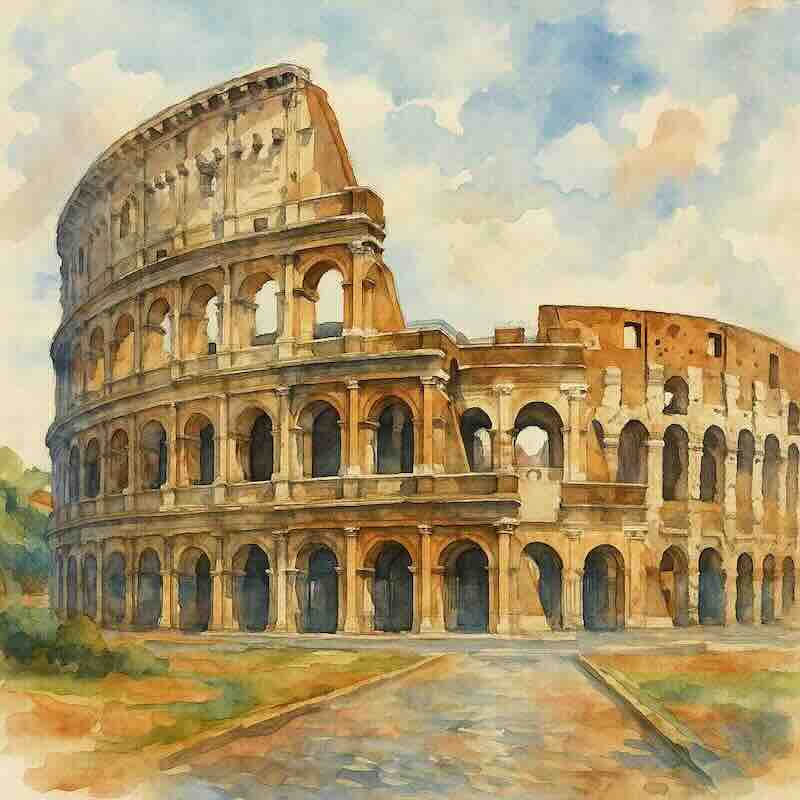
The Colosseum is a big building.
It is in Rome.
Rome is in Italy.
The Colosseum is very old.
It is round.
It is made of stone.
People built it long ago.
Roman people built it.
They worked for many years.
The building is very big.
The Colosseum is a stadium.
Many people went there.
People sat inside.
They watched shows.
The shows were loud.
The shows were exciting.
Men fought in the stadium.
These men were gladiators.
Gladiators were strong.
They fought with swords.
The fights were dangerous.
Some fights were real.
Animals were there too.
Lions were there.
Tigers were there.
People watched the animals.
People liked the shows.
The Colosseum had many seats.
Many people sat together.
Some seats were high.
Some seats were low.
Rich people sat in front.
Poor people sat far back.
Today, the Colosseum is still here.
It is old but strong.
Some parts are broken.
Many people visit it today.
Tourists walk around it.
They take pictures.
They say “Wow.”
The Colosseum is famous.
It is part of history.
It tells a story from the past.
People want to protect it.
They clean and fix the stones.
The Colosseum is important.
Level 1 Reader
430 Words
A Big Old Building
The Colosseum is in Rome, Italy. It is a big, round building. It is very old. The Colosseum is almost 2,000 years old. Long ago, Roman people built it. They used stone and bricks. It took many years to build. Today, many people visit the Colosseum.
What Is It?
The Colosseum is a stadium. It is like a big sports stadium. People sat inside and watched shows. The shows were loud and exciting. Sometimes, people fought in the stadium. These people were called gladiators. They fought with swords. The fights were dangerous. Sometimes, animals came too. Lions and tigers were in the Colosseum! They ran and jumped. People liked to watch.
Gladiators
Who were the gladiators? They were strong men. They learned to fight. They fought for the people. Some gladiators were free men. Some were slaves. They had to fight. It was not easy. Sometimes, they died. The fights were real. People cheered. It was a big show.
So Many People
The Colosseum was very big. It could hold 50,000 people. That is a lot of people! There were many seats. Some seats were high. Some seats were low. Important people sat in the front. Poor people sat in the back. The people ate food. They talked. They laughed. They waited for the show.
The Colosseum Today
The Colosseum is still here. It is old, but strong. Some parts are broken. But you can still see it. Many tourists go there. They walk around it. They take pictures. They say, “Wow!” It is a special place. It tells a story from long ago. It is part of Roman history.
Fun Facts
The Colosseum is also called the Flavian Amphitheatre. It opened in the year 80. It had 80 doors! The Colosseum had a roof, like a big tent. It is one of the most famous buildings in the world.
Let’s Visit!
Do you want to see the Colosseum? You can go to Rome. You can stand inside. You can look at the stone walls. You can think about the past. You can imagine the people. You can see what they saw. It is a trip back in time.
Protecting the Colosseum
The Colosseum is very old. Rain, wind, and time can hurt it. Some stones fall down. Some parts are weak. Many people work to help. They clean the walls. They fix the stones. They want to keep it strong. The Colosseum is important. It is part of world history. We must take care of it. So people in the future can see it too.
Level 2 Reader
538 Words
A Famous Building
The Colosseum is one of the most famous buildings in the world. It is in the center of Rome, the capital of Italy. Millions of people visit it every year. The Colosseum is very old. It was built almost 2,000 years ago.
When people first see the Colosseum, they are surprised. It is big, strong, and beautiful. It looks like a huge circle, but it is really more like an oval. Even though many parts are broken or missing, the building is still very impressive.
A Place for Shows
The Colosseum was used for shows and games. Roman emperors wanted to entertain the people. They gave them free tickets to watch fights between gladiators. Gladiators were strong men who fought with swords and shields. Sometimes, they had to fight wild animals like lions or tigers.
These events were exciting but also very violent. Many people and animals died in the Colosseum. The Romans enjoyed these shows, and they cheered loudly for their favorite fighters.
A Clever Design
The Colosseum could hold about 50,000 to 80,000 people. It had many entrances, so people could enter and leave quickly. The Romans were very smart engineers. They used strong stones and special concrete to build the Colosseum.
There were also underground rooms under the arena. These rooms were used for animals, fighters, and equipment. A system of elevators and ramps helped move things up to the arena floor.
The Colosseum even had a kind of roof! On hot days, Roman sailors pulled a large cloth over the top to protect people from the sun.
Changes Over Time
After the Roman Empire ended, the Colosseum was not used for games anymore. For hundreds of years, it was used in many different ways. Some parts were taken and used to build other buildings. Earthquakes also damaged the structure.
In the Middle Ages, people used it as a place to live or to keep animals. Later, the Catholic Church protected it. They said it was a holy place because many Christians had died there long ago.
A Symbol of Rome
Today, the Colosseum is a symbol of Rome and of ancient Roman power. It shows how skilled Roman builders were. It also reminds us of the past — both the great achievements and the terrible violence.
Tourists can visit the Colosseum and walk where the gladiators once stood. They can also learn about Roman life and see special exhibitions. At night, the Colosseum is lit up with lights and looks magical.
The Colosseum is also used for important events. For example, every year the Pope leads a special walk on Good Friday. People remember the history and pray for peace.
Protecting the Past
Because the Colosseum is so old, it needs special care. Experts are working to clean and repair the building. Pollution and weather make it harder to keep it safe. But people around the world want to protect it.
In 2007, the Colosseum was named one of the New Seven Wonders of the World. This shows how important it is not only to Italy, but to the whole world.
The Colosseum teaches us about history, architecture, and culture. It also reminds us that we must take care of our shared human past.
Level 3 Reader
570 Words
The Colosseum in Rome
When people think of Rome, one of the first images that comes to mind is the Colosseum. This ancient amphitheater, with its massive stone arches and weathered ruins, stands as a symbol of the Roman Empire’s power and engineering brilliance. It has been visited by millions of people from all around the world, and despite the centuries that have passed, it continues to captivate the imagination.
The Colosseum, originally known as the Flavian Amphitheater, was built nearly 2,000 years ago. Construction began around 72 AD during the reign of Emperor Vespasian and was completed in 80 AD under the rule of his son, Titus. Later emperors, including Domitian, added further modifications. The structure was built as a gift to the Roman people, offering entertainment on a scale that had never been seen before.
The building itself is enormous. It could hold between 50,000 and 80,000 spectators, depending on the source. It was designed in a way that allowed the crowds to enter and exit quickly, using a series of numbered arches and passageways. Even by modern standards, the organization and design of the stadium are impressive.
The events held in the Colosseum were often brutal. Gladiator fights were among the most popular attractions. These battles involved trained warriors, many of whom were enslaved people, prisoners of war, or criminals. They fought one another, or sometimes wild animals, to the death. The Roman public loved this form of entertainment, and emperors used the games to win favor and distract the population from political issues.
But the Colosseum wasn’t used only for combat. It also hosted theatrical performances, re-enactments of famous battles, and even mock sea battles. For these events, the arena could be flooded with water using an advanced system of aqueducts and drains. Historians still debate exactly how these “naumachiae” were managed, but there is no doubt they occurred.
Over time, the Roman Empire declined, and the Colosseum fell into disuse. Earthquakes damaged the structure, and stones were removed and reused in other buildings throughout Rome. During the Middle Ages, it was used as a fortress, a quarry, and even a Christian shrine.
In the 18th and 19th centuries, the Colosseum began to be seen as a cultural and historical treasure. Archaeologists, artists, and poets helped renew interest in the site. Restoration work began, and today, it is one of the most visited landmarks in Europe. It is also a UNESCO World Heritage Site, recognized for its cultural significance.
Despite its dark history, the Colosseum is a symbol of resilience. It has survived wars, natural disasters, and centuries of neglect. It reminds us of humanity’s capacity for both cruelty and creativity. While it once echoed with the sounds of violence, today it echoes with the footsteps of curious visitors and the voices of tour guides telling its story.
Visiting the Colosseum today is an unforgettable experience. Standing in its shadow, you can almost hear the roar of the crowd, the clashing of swords, and the cries of the performers. Yet you can also admire the brilliant architecture, the careful planning, and the deep history that continues to shape our understanding of ancient Rome.
The Colosseum is more than a ruin. It is a living connection to the past, a place where history, art, and memory all come together. It teaches us about who we were, who we are, and perhaps who we still want to be.
Extensive Listening
First Sentences
Level 1 Audio
Level 2 Audio
Level 3 Audio
Natural Overview 1
Natural Overview 2
Natural Discussion
Audio is AI-generated using
AWS Polly or Google NotebookLM
Check Your Understanding
Comprehension Activity
A) In the article or B) Not in the article.