

Level 1 Reader
562 Words
The Necklace
Mathilde Loisel was a young woman. She was pretty, but she was not rich. She lived in a small apartment in Paris with her husband. Her husband was a clerk in an office. He worked hard, but he did not earn much money.
Mathilde was not happy. She wanted a big house. She wanted beautiful dresses. She wanted gold and diamonds. She wanted rich friends. But she had simple furniture and simple food. She felt sad every day.
Her husband loved her very much. One evening, he came home with a letter. He was smiling.
“I have something for you,” he said.
He gave her the letter. It was an invitation to a big party at the Ministry of Education. Many important people would be there.
Instead of feeling happy, Mathilde was upset.
“I have nothing to wear,” she said. “I cannot go.”
Her husband felt bad. He wanted her to be happy.
“How much money do you need for a new dress?” he asked.
She thought carefully. She did not want to ask for too much.
“Four hundred francs,” she said.
This was a lot of money. Her husband saved this money for a gun to go hunting. But he gave it to her.
Mathilde bought a beautiful dress. Now she looked lovely. But she was still worried.
“I have no jewelry,” she said. “I will look poor.”
Her husband had an idea.
“Go and see your friend Madame Forestier,” he said. “Maybe she can lend you something.”
Mathilde went to her rich friend. Madame Forestier showed her many beautiful things. Mathilde chose a diamond necklace. It was very beautiful. She felt happy and proud.
On the night of the party, Mathilde looked wonderful. Many men looked at her. She danced and laughed. She forgot her small apartment. She felt like a rich lady.
They stayed at the party until four in the morning. Then they went home.
When Mathilde looked in the mirror, she gave a cry.
“The necklace is gone!”
They looked everywhere. They searched in the street. They did not find it.
They were afraid. They did not tell Madame Forestier the truth. Instead, they decided to buy another necklace.
They found a necklace that looked the same. It cost thirty-six thousand francs. This was a huge amount of money.
They borrowed money from many people. They signed papers. They promised to pay it back.
They gave the new necklace to Madame Forestier. She did not look at it carefully.
Then their hard life began.
They moved to a small, cheap room. Mathilde washed clothes. She carried water. She cleaned floors. She worked all day. Her husband worked in the office and also worked at night. They paid money every month.
Ten years passed.
After ten years, they finished paying all the money. Mathilde looked old and tired now. Her face was hard. Her hands were rough.
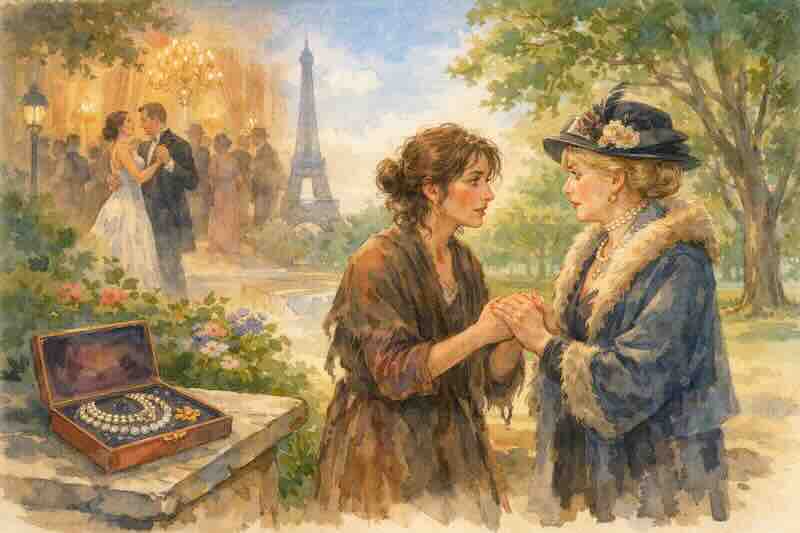
One day, she saw Madame Forestier in a park. Madame Forestier still looked young and beautiful.
Mathilde felt brave.
“I must tell you something,” she said. “I lost your necklace. We bought a new one for you. It took us ten years to pay for it.”
Madame Forestier looked surprised.
“My poor Mathilde!” she said. “My necklace was not real. It was fake. It was worth only five hundred francs.”
Mathilde stood there in silence.
Ten years of hard work… for nothing.
Level 2 Reader
748 Words
The Necklace
Mathilde Loisel was born into a simple family. She was beautiful and charming, but she was not rich. She married a clerk who worked at the Ministry of Education. He was kind and honest, but he earned only a small salary. They lived in a modest apartment in Paris.
Mathilde was unhappy with her life. She dreamed of elegant houses, soft carpets, shining silver dishes, and fine dresses. She imagined rich people talking in warm, bright rooms. When she looked at her old furniture and simple meals, she felt disappointed. She believed she deserved a better life.
Her husband did his best to please her. One evening, he came home with an envelope in his hand and a proud smile on his face.
“I have great news,” he said. “We are invited to a grand party at the Ministry!”
It was a rare and special event. Many important people would attend. He thought she would be excited.
Instead, Mathilde began to cry.
“I have nothing to wear,” she said. “I cannot go to such a party looking like this.”
Her husband was surprised. He suggested that she buy a new dress.
“How much will it cost?” he asked carefully.
After thinking for a while, Mathilde answered, “Four hundred francs.”
This was the exact amount of money he had saved for a hunting gun. He hesitated, but he wanted her to be happy. He gave her the money.
Mathilde bought a lovely dress. However, a new problem appeared.
“I have no jewelry,” she complained. “Everyone will notice that I am poor.”
Her husband advised her to visit her rich friend, Madame Forestier, and ask to borrow something.
Madame Forestier welcomed her warmly and showed her a box full of beautiful jewelry. There were bracelets, pearls, and gold crosses. Then Mathilde saw a diamond necklace. It shone brightly in the light. She asked to borrow it, and her friend agreed without hesitation.
On the night of the party, Mathilde looked stunning. Her dress fit her perfectly, and the necklace sparkled around her neck. At the party, she felt admired and important. Men asked her to dance. Women looked at her with interest. She forgot her ordinary life and enjoyed every moment.
They left the party at four in the morning. Outside, the cold air felt sharp after the warm rooms. They could not afford a carriage and had to walk for a while before finding one.
When they finally reached home, Mathilde stood in front of the mirror to admire herself one last time. Suddenly, she cried out in fear.
The necklace was gone.
Her husband immediately went back into the dark streets to search for it. Mathilde waited at home, still wearing her evening dress. He returned hours later, tired and pale. He had found nothing.
They searched everywhere and reported the loss to the police. There was no result.
At last, they decided to replace the necklace. They found one that looked exactly the same in a jewelry shop. The price was thirty-six thousand francs. It was an enormous amount of money.
They used all the money her husband had inherited from his father and borrowed the rest. They signed many papers and promised to repay the loans with high interest.
Mathilde returned the new necklace to Madame Forestier, who did not examine it closely.
From that moment, their life changed completely.
They moved into a smaller, poorer apartment. Mathilde learned to do all the housework herself. She washed dishes, cleaned floors, and carried heavy buckets of water. She went to the market and argued over prices. Her husband worked during the day and took extra jobs at night. Life became hard and exhausting.
Years passed. After ten years of sacrifice and struggle, they finally paid back all the money. Mathilde looked much older than her age. Her beauty had faded. Her hands were rough, and her voice was strong and tired.
One Sunday, she met Madame Forestier walking in a park. Her friend still looked young and elegant.
Mathilde decided to tell her the truth.
“You must know,” she said proudly, “that I lost your necklace. We bought another one to replace it. It took us ten years to pay for it.”
Madame Forestier stared at her in shock.
“Oh, my poor Mathilde,” she said gently. “My necklace was imitation jewelry. It was worth no more than five hundred francs.”
Mathilde understood in that moment that ten years of suffering had been caused by a terrible misunderstanding.
Level 3 Reader
872 Words
The Necklace
Mathilde Loisel was one of those women who seem born for luxury, yet find themselves trapped in ordinary lives. She was attractive and naturally elegant, but she had no fortune and no powerful family connections. She married a minor clerk at the Ministry of Education, a kind and devoted man who earned just enough to live modestly in a small apartment in Paris.
For Mathilde, however, modesty felt like injustice. She longed for silk curtains, shining chandeliers, and quiet rooms filled with beautiful objects. She imagined herself seated at a grand table, admired for her beauty and grace, speaking softly while servants brought delicate dishes on silver plates. Every simple meal she ate seemed like a reminder of what she did not have. She believed she had been made for something finer.
Her husband, who loved her deeply, did not fully understand her suffering. One evening, he returned home carrying an envelope and wearing a proud smile.
“I have wonderful news,” he said. “We are invited to a reception at the Ministry. It is a very important event.”
He expected her to be delighted. Instead, she stared at him in silence before tears filled her eyes.
“What do you expect me to wear?” she asked. “I have nothing suitable for such an occasion.”
He suggested that she buy a new dress.
After some hesitation, she said she would need four hundred francs. It was a considerable sum—the exact amount he had been saving to buy a hunting rifle. Although disappointed, he handed over the money without complaint.
The dress was soon purchased, and Mathilde looked radiant in it. Yet her anxiety did not disappear.
“I cannot go without jewelry,” she insisted. “I will look poor beside all those wealthy women.”
Her husband advised her to visit her old friend, Madame Forestier, who was comfortably rich. Perhaps she would lend her something.
Madame Forestier welcomed her warmly and opened a large jewelry case. Inside were bracelets, strings of pearls, and delicate gold ornaments. Then Mathilde noticed a diamond necklace that sparkled brilliantly. It seemed exactly what she needed. She asked to borrow it, and her friend agreed easily.
On the evening of the reception, Mathilde felt transformed. The dress flowed gracefully around her, and the necklace shone at her throat. At the party, she was a success. Men asked her to dance; officials listened attentively when she spoke. For a few hours, she experienced the admiration she had always imagined. She felt that she truly belonged among the elegant guests.
They left near four in the morning. Outside, the winter air felt harsh and empty after the warmth of the ballroom. Unable to find an immediate carriage, they walked some distance before securing one. Exhausted but happy, they finally returned home.
Standing before the mirror to admire herself once more, Mathilde suddenly froze. The necklace was no longer around her neck.
Her husband hurried back into the dark streets to retrace their steps. Mathilde waited anxiously, still dressed for the ball. He searched until morning but found nothing. They reported the loss to the police and placed notices in newspapers. Days passed without success.
At last, they decided to replace the necklace. In a jewelry shop, they found one that looked identical. The price was thirty-six thousand francs—a staggering amount. They used all the money her husband had inherited from his father and borrowed the rest at high interest. They signed loan agreements that would burden them for years.
When Mathilde returned the necklace to Madame Forestier, her friend accepted it without examining it closely.
From that day forward, their life changed completely.
They dismissed their servant and moved into a cheaper apartment in a poorer neighborhood. Mathilde learned to manage the household herself. She washed dishes until her hands grew red and rough. She carried water up several flights of stairs. She bargained fiercely in markets to save a few coins. Her husband worked long hours at the office and copied documents late into the night for additional pay.
The years passed slowly and painfully. Beauty faded under the weight of labor. Mathilde’s face grew lined; her voice became firm and tired. She had become a strong but hardened woman, shaped by necessity.
After ten years of relentless effort, they finally repaid the debt. They had sacrificed comfort, youth, and peace to settle their obligation.
One afternoon, while walking in the Champs-Élysées, Mathilde saw Madame Forestier, who still looked graceful and youthful. For a moment, Mathilde hesitated. Then she approached her.
“You may not recognize me,” she said quietly.
Madame Forestier looked puzzled until Mathilde revealed her identity. Shock crossed her face.
“I must tell you,” Mathilde continued, “that I lost the necklace you lent me. We replaced it with another. It took us ten years to pay for it.”
Her friend grasped her hands in disbelief.
“Oh, my poor Mathilde,” she said gently. “My necklace was imitation jewelry. It was worth no more than five hundred francs.”
In that instant, Mathilde understood the tragic irony of her fate. A desire to appear wealthy had cost her the best years of her life. The glittering necklace, which had symbolized her dream of elegance, had in truth been only an illusion.
Extensive Listening
Level 1 Audio
Level 2 Audio
Level 3 Audio
Natural Overview 1
Natural Overview 2
Natural Discussion
Audio is AI-generated using
AWS Polly or Google NotebookLM